
What's a computer? What's a console? What's an Xbox?
We've been asking these questions for years. Suddenly the answers matter again.

We’ve been asking questions about the underlying nature of computers vs. tablets vs. game devices vs. everything else for decades. I specifically recall spending a good deal of time on the “Is it a computer?“ question right around the time of the original iPad launch.
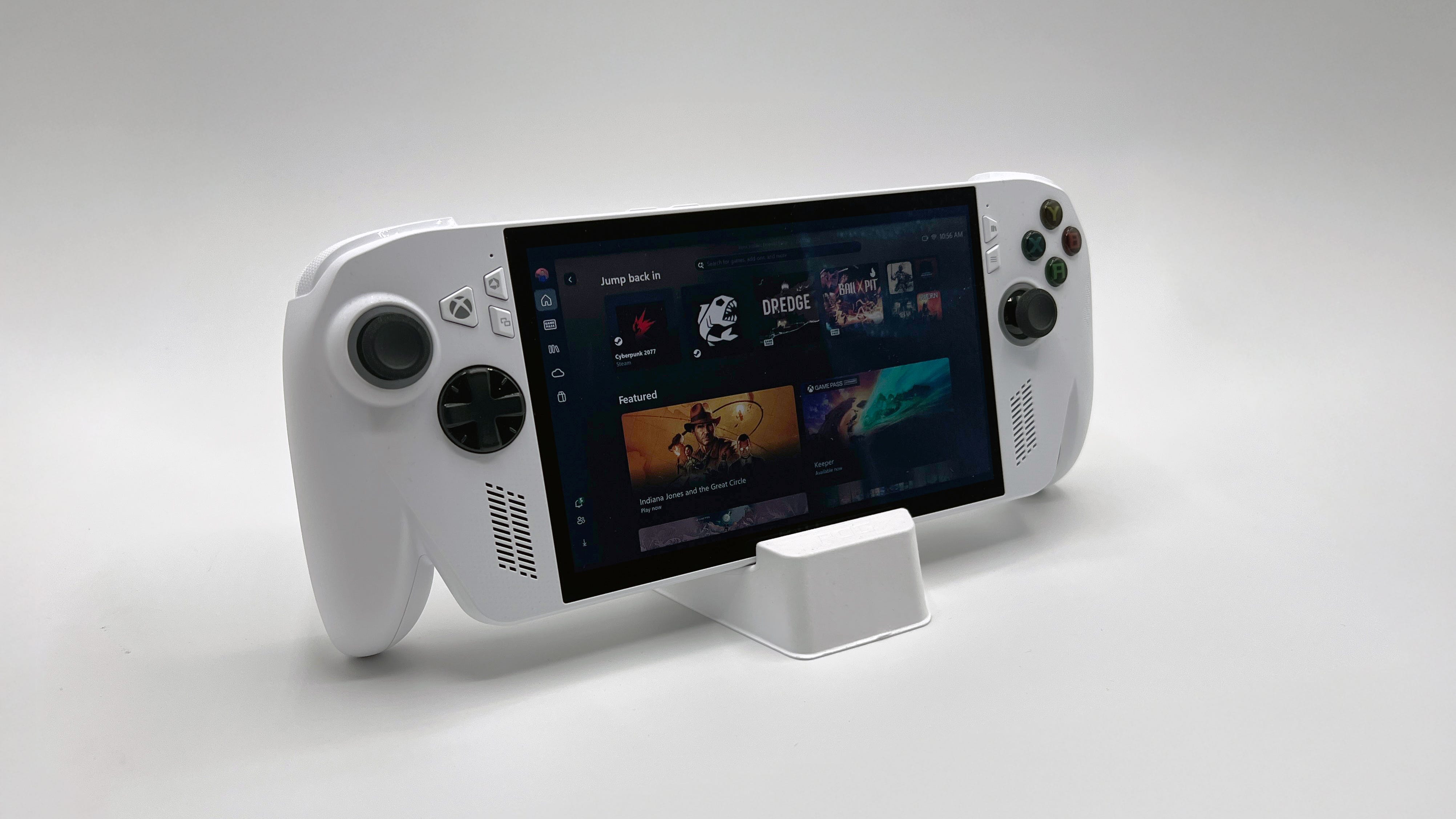
Today, I’ve got to credit Microsoft with an extremely clever bit of marketing that’s returned our attention to the blurred lines between tech product categories. The company took a fairly standard off-the-shelf handheld gaming PC, part of the Asus ROG Ally series, gave it some Xbox branding, and the next thing you know you have mainstream non-tech/non-games media writing or doing TV segments about this new handheld Xbox.
For a brand that’s been losing classic console mindshare to PlayStation and Nintendo, it’s a pretty deft maneuver. Especially after getting some bad press and a wave of cancellations over its recent Game Pass Ultimate price hike, all under a reported corporate mandate for 30% (!) profit margins.
Of course the Asus ROG Xbox Ally isn’t truly a handheld game console like the Nintendo Switch. It’s a portable PC, and a Windows 11 one at that. So anyone expecting a pick-up-and-play experience would be in for a shock. This is a Windows 11 PC, with the same setup and update process you’d have to follow on a new laptop or desktop -- just with a much smaller screen, tiny onscreen keyboard, and no touchpad or mouse.
That said, even setting up the recent Nintendo Switch 2 was a long, involved process. I can’t think of a single modern gadget from the past several years that you can just turn on for the first time and run with -- the classic Game Boy being the platonic ideal of that experience.
But I did get the Xbox Ally up and running, although it was probably easier for me, having previously used/tested/reviewed the original Steam Deck, several flavors of Lenovo Legion Go, the original ROG Ally, and even the now-forgotten wave of handheld UMPC Windows devices from ~2007.
Still, the process feels like it would be interminable to anyone who didn’t already have a strong tolerance for troubleshooting and a general liking for tinkering with PCs. Wisely, the Xbox Ally attempts to keep you locked to a new “full screen” view of the Windows-native Xbox app, but you’ll inevitably have to dive into the guts of Windows. (Also, after hearing so much about it, I had to double check to make sure I was actually getting the new view of the Xbox app -- it’s really not much different than the standard view.)
The original Steam Deck felt like a beast to tame at launch in 2022, in part because it was such a new concept. But today, the SteamOS it uses feels like an amazing match for handheld PCs. Lenovo has wisely adopted it for some versions of the Legion Go S (there’s also a Windows version), and I’m sure we’ll see more hardware with SteamOS in the future.
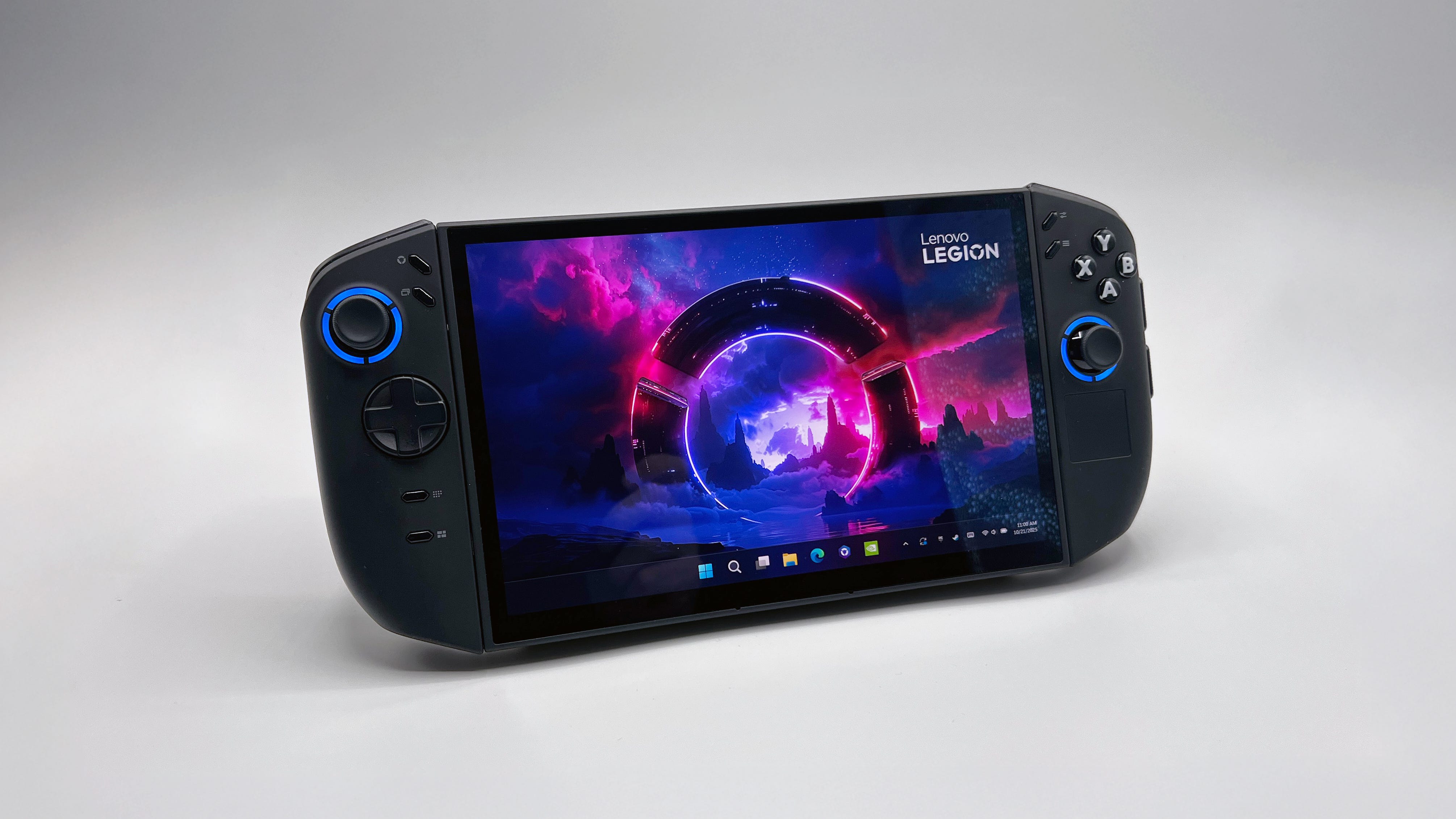
In my hands-on testing with the new Asus Xbox Ally, I was using the lower-end version of the device, with AMD’s Z2 chip. At the same time, I’ve also been testing the Lenovo Legion Go 2, with the higher-end AMD Z2 Extreme chip. My immediate takeaway is that whatever handheld gaming PC you pick, always get the faster processor. The lower-end ones are fine for casual gaming (Dredge, Ball x Pit, etc.), but really struggle with more intensive games. I managed to get Cyberpunk 2077 running on the Z2 Xbox Ally by turning every setting down to the lowest level and dropping the resolution, but even that only got me into the mid/high-40s in frames per second. Plus, even basic system navigation on the base Z2 chip feels...very...slow...
Systems with the Z2 Extreme (including the Xbox Ally X) feel like they can at least tame the demands of Windows 11. Right now, the new Lenovo Legion Go 2 is my fave of all these systems, as it has the Z2 Extreme, a very helpful 32GB of RAM, and a stunning 8.8-inch OLED display. For a GenX-er with, ahem, imperfect eyesight, that’s probably the single biggest selling point.
Counterpoint -- the Xbox Ally has really amazing ergonomics. It’s thinner, lighter, and has these great grips that mimic the feel of an Xbox game controller. But the smaller 7-inch LCD screen really holds it back.
As long as these handheld game devices look like consoles but work like computers (in ways both good and bad), they’re going to remain a tough sell to mainstream consumers.
Well, that and the crazy prices some of these systems are asking. While the original Steam Deck still starts at $400 (but trust me, get one of the upgraded models with an OLED screen), even the low-power basic version of the Asus ROG Xbox Ally is $600. The Xbox Ally X with the Z2 Extreme is $999, and the top-of-the-heap Lenovo Legion Go 2 with the Z2 Extreme and bigger OLED screen, is $1,350.
That’s one universal constant, at least -- prices seem to be going up. These new handheld PCs all cost more than the still-available Steam Deck, and even the current-gen PS5 Pro ($750) and Xbox Series X ($650) are literally going up in price, which used to be unheard of for hardware more than halfway through its lifecycle.
Shifting definitions
The question of “What counts as a computer?” has been asked in every generation of the PC era. And that goes extra for Macs and iPads, where the MacOS and iPadOS platforms continue to bleed closer together. But long before Macs and iPads truly fuse into a single grand unified theory of Apple devices, I think we’ll see the Xbox and PC platforms merge.
More specifically, the next Xbox will more obviously be a desktop PC in a slightly different plastic box. Game functionality is already largely there, with a sizable chunk of the Xbox catalog playable with a single purchase across both PC and console, with shared saves, despite essentially different executables. Microsoft is also emphasizing the PC side of gaming right now, and largely ceding more traditional console trappings, like big exclusive games, to Nintendo and Sony. The company may see the wider PC platform as a more attractive place to stake a flag, especially as console hardware itself was always a loss-leader business.
I also think, after watching all these devices grow and evolve for 20-plus years, that the accepted definition of a computer will atomize over time over a wider range of products. Your smart eyeglasses are a computer, your game devices are all computers, your always-on AI wearable is a computer.
When that happens, will anyone still need a standalone lap-sized screen with a keyboard and touchpad?
Recent reviews
Besides the Asus ROG Xbox Ally and Lenovo Legion Go 2 mentioned above, I’ve also been busy testing and reviewing some other noteworthy gadgets.
Logitech MX Master 4
First up is the eagerly awaited Logitech MX Master 4 -- which feels great in the hand and has some wacky extra features that you might actually use (like the Action Ring). From my Micro Center News review:
It’s a hefty mouse, weighing in at about 5.2 ounces (150g), and at $120, it’s a premium device. But for something that can be a comfortable high-end productivity mouse and can also handle some light gaming, it can be worth it, especially considering that people keep their MX Master mice for years.
The most important feature is the updated rubberized thumb button, which provides haptic feedback and activates a radial menu Logitech calls the Action Ring. This is where you get features that might be new to most users. Using the Logi Options+ software, I immediately customized the ring, swapping out a less-useful emoji command for a “Show Desktop” shortcut and adding system volume controls. It’s an intuitive way to create workflow-specific shortcuts, and you can also download sets of commands for specific apps, from Figma to Final Cut Pro.
Read the full review at Micro Center News.
Razer Blade 14 (2025)
Next up, a new gaming laptop that might kick off a wave of AMD/Nvidia laptops, always something of a rarity. From my MC News review:
This Blade 14 combines an AMD Ryzen AI 9 365 processor with an NVIDIA GeForce RTX 5070 laptop GPU. While mixing AMD CPUs and NVIDIA GPUs is standard practice in the desktop DIY market, it’s a genuine rarity in the laptop space. It’s also an especially appealing combination when considered alongside the system’s other big selling point, a 3K (2,880x1,800) OLED panel.
The included NVIDIA GeForce 5070 laptop GPU is ideal for thin-and-light gaming, and while it’s not as powerful as the 5080 and 5090 parts in larger 16-inch and 18-inch gaming laptops we’ve reviewed, I used it as my main work and gaming laptop for a couple of weeks with no problems...In hands-on testing with Cyberpunk 2077, I ran the system at native resolution at the Ray Tracing Medium settings with 2x DLSS frame generation turned on for a fluid 80-90 frames per second in my hands-on testing, and a solid 75fps in the game’s built-in benchmark.
Read the full review at Micro Center News.
The Cheat Sheet
> Read my book here: The Tetris Effect
> Threads: threads.net/@danack
> Bsky: danackerman.bsky.social
> LinkedIn: linkedin.com/in/danackerman
> TikTok: tiktok.com/@danacknyc
> YouTube: youtube.com/danackerman
> IG: instagram.com/danack
> MC News: microcenter.news
Some good points.
It makes me think of, among other things, how the streaming hegemony is blurring the boundary between what is a film/what is a tv show/what is a minseries/etc. in the film & tv world.