
Why Copilot Could Win the AI Wars
Microsoft has 1.5 billion reasons to be your first AI choice.

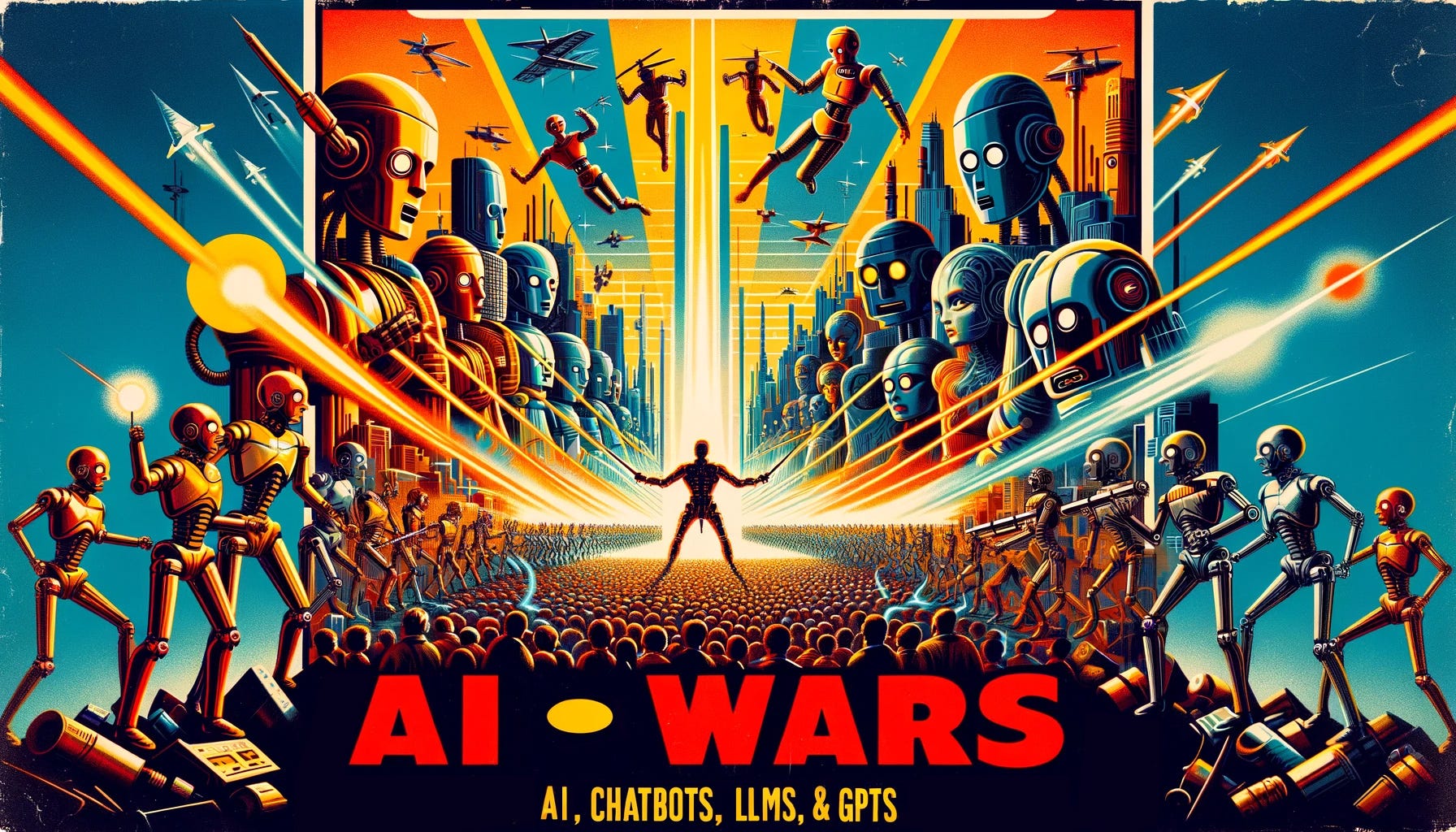
I've been thinking about AI for quite a while now, having been caught up in two of the biggest AI journalism scandals to date, and generally being interested in how to use this technology without falling prey to its worst traits. A lot of my thinking has been centered on OpenAI's ChatGPT, Google's Genesis (formerly Bard), and various flashy AI startups.
I was in a meeting recently where a tech exec said something that stuck with me: Staid old Microsoft may not always be the most exciting company in the world, but it has such a built-in advantage that it's starting halfway down the field already. By bundling its own Copilot with Windows 11, and embracing the local AI that will eventually run on modern CPU/NPU combos, AI may be Microsoft's game to lose.
"For most people," this exec told me, "Copilot will be AI." After all, Safari only has significant browser market share because it's the built-in default on Mac systems, and Edge has significant browser market share on Windows PCs because it's similarly built in. If every one of the roughly 1.5 billion Windows PCs running right now had a built-in AI assistant, that's a pretty important advantage. Especially if it uses local computational power to run, rather than solely relying on cloud-based tools that can be subject to outages, need a reliable internet connection, and are just inherently less secure than keeping your AI queries on your local machine.
But we're not there yet, and there are plenty of missteps that could cost Microsoft this first-mover advantage. First, something like 70% of the Windows PCs in action right now are still running Windows 10. They won't get Copilot until they upgrade to Windows 11, if they even can. The end of support for Windows 10 is coming in late 2025, so there will be a lot of forced upgrades, but it's going to be a slow process.
Second, new chips from Intel, AMD, Qualcomm, and Nvidia are needed to effectively process AI tasks onboard. These new chips have been slow in coming, and both Microsoft and PC makers have been slow to embrace support for these new chips. It'll take the better part of this year -- at the very least -- to start sorting that out.
We've hopefully started to move past the initial stage of seeing AI as a gold mine -- or at least a free source of intern-level labor. Now. it's time to figure out what these tools can actually do for us, both as individuals and as businesspeople. If real estate is all about location, location, location, then having a spot on the task bar of 1.5 billion Windows PCs is about as close to an unfair advantage as one can get. It's up to Microsoft to make sure this home court advantage actually amounts to something.
Read more:
Subscribe to this newsletter for more: danackerman.substack.com. Tech Support with Dan Ackerman is a regular email series from this veteran technology reporter, where I share stories about how technology affects our everyday lives, plus interesting links and news.
Forward or share with your friends, or they can sign up here: danackerman.substack.com
See more at:
Web: danackerman.com
Twitter: twitter.com/danackerman
Threads: threads.net/@danack
TikTok: tiktok.com/@danacknyc
YouTube: youtube.com/danackerman
Instagram: https://instagram.com/danack
Bluesky: danackerman.bsky.social
LinkedIn: linkedin.com/in/danackerman
Gizmodo: gizmodo.com/author/danack
Plugs! 
Buy my book, The Tetris Effect!
“Upends the standard Silicon Valley, Steve Jobs/Mark Zuckerberg technology-creation myth...the story shines” — The New York Times
Techlandia is a modern dungeon crawl adventure where 1-4 heroic tech bloggers infiltrate the high-tech headquarters of the all-powerful Techlandia corporation. The goal: Stop the launch of a new smartphone that just might destroy the world...
“A fun mix of quirky social commentary and Lovecraftian horror.” — Gizmodo